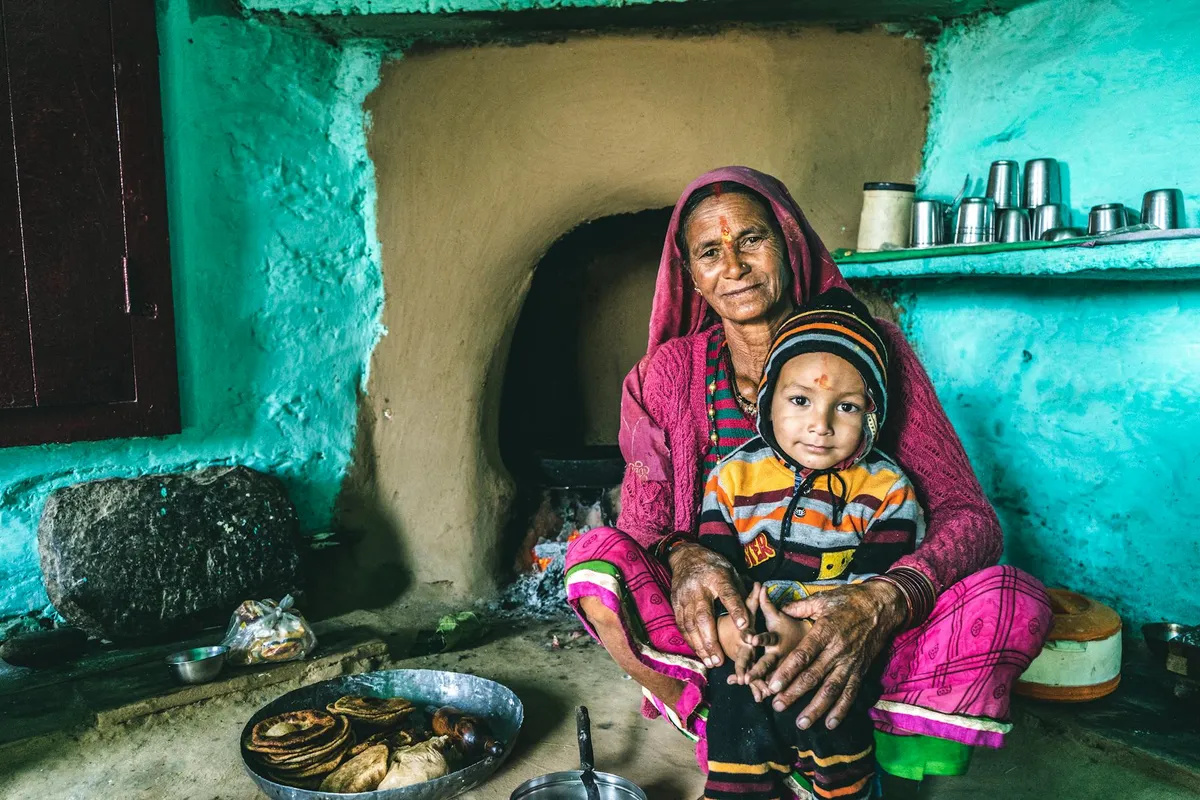
If you grew up in an Indian family in the 80s or 90s, the Sunday visit to nani's house was probably one of the load-bearing rituals of your week. You woke up Sunday morning, your mother made you wear nice clothes, you piled into the car (or the autorickshaw, or you walked, depending on where you were), and you spent the day at your grandmother's. There was food. There were cousins. There were aunts and uncles who you saw weekly without it being a big deal. There were arguments and resolutions and the kind of slow afternoon that Indian Sundays specifically used to have.
That weekly ritual has substantially shifted now. Families spread across cities, across countries. The visit happens once a month, or every few months, or only on big festivals. What's gotten lost in this shift is worth thinking about — not to argue that things were better before, but to be clear about what the old pattern was doing, so we can replace it with intention rather than just letting it dissolve.
What the Sunday visit was for
The most obvious thing the Sunday visit was for: time with grandparents. Your nani and nana got weekly time with you, watched you grow up, taught you things in small increments rather than in concentrated visits. The relationship was textured by accumulation. You didn't have to "catch up" each time because there wasn't a long gap to catch up across.
The less obvious thing it was for: extended family as a default, not an effort. Your cousins were people you saw weekly. Your aunts and uncles were familiar adults you knew well. The extended family wasn't something you had to coordinate; it was something you fell into every Sunday. When something major happened — a wedding, a death, a graduation — the extended family was already a functioning unit. They didn't have to be assembled from scratch.
The slow afternoon
The texture of those Sundays is hard to describe to someone who didn't experience them. The morning was the journey, the greeting, the settling-in. Lunch was a long, multi-dish affair that took the whole household to prepare. The afternoon was slow — the adults sleeping or talking in low voices, the children playing in whichever space was available, the older cousins reading or supervising the younger ones.
The slowness mattered. It created the conditions for unscheduled conversations to happen. Your nani would tell you a story you'd never heard. An uncle would mention a family history detail you didn't know. A cousin would say something that opened up a friendship that wouldn't have developed in a structured setting.
This is the thing about slow time. It's not that anything specific had to happen. It's that the space was there for things to happen, if they wanted to. The contemporary equivalent — the planned, time-boxed family visit — doesn't leave that space. Everyone arrives, things happen on schedule, everyone leaves. The unscheduled moments don't have room to emerge.
What replaces it now
Most of us don't live near our grandparents anymore. The Sunday visit, in the old form, isn't possible. What's replaced it varies by family. Some families have weekly video calls. Some have monthly in-person visits. Some have annual festival gatherings. Some have substantially less than that.
The video call is good but it's not the same. Video calls are scheduled, they happen at a specific time, they end at a specific time. They don't leave space for the slow accumulation that the in-person visit produced. Your grandmother's stories require time and quiet and a specific kind of attention. The video call doesn't provide those conditions.
The monthly visit is closer to the old form, but the lower frequency changes the texture. Once-a-month visits are events. They require effort to plan and execute. The relationship gets recharged at each visit but doesn't have the constant baseline that weekly visits maintained.
What gets lost
What gets lost in this shift, at minimum, is the unscheduled conversation. Your grandmother's stories, which she would have told you in pieces across weeks of Sundays, now have to fit into shorter visits or video calls. Some of them don't fit. They require the slow afternoon that doesn't exist in the contemporary schedule.
What also gets lost is the casual familiarity with extended family. Your cousins, who you used to see weekly, are now distant. Your aunts and uncles, who you used to know as familiar adults, are now half-strangers. When something happens that requires the extended family — a death, a major celebration — the family has to be reconstituted on the fly rather than mobilized from a steady baseline.
What can be preserved
I want to be careful not to romanticize this. The old patterns had costs too. Joint families could be claustrophobic. Weekly visits were sometimes obligations rather than pleasures. The slow afternoon was sometimes the slow afternoon of nothing happening and everyone being a little bored. The new patterns have their own benefits — more privacy, more flexibility, more autonomy.
But I think there are things from the old pattern worth trying to preserve, even within the constraints of the new pattern. Visit your grandparents more often than you currently do. When you visit, stay longer than you think you should. Leave space in the visit for slow time — don't schedule every hour. Let your grandmother tell you stories without interrupting. Let your children play with their cousins in the unstructured way the old afternoons used to allow.
These are small things. They don't replicate the old pattern. But they preserve some of what the old pattern did, which is what matters.
The thing about the slow time
If I could pick one thing from the old Sunday visits to preserve, it would be the slow time. The contemporary family visit is too efficient. We arrive, we eat, we catch up, we leave. The schedule is packed. The visit is good but it's not transformative.
The slow time is what made the old visits transformative. The hours of nothing-in-particular happening, with everyone in the same physical space, available for the unscheduled moment. The story that emerged because there was space for it. The conversation that started because there was no agenda.
If you can find a way to recreate the slow time, even occasionally, you can recover something of what the old Sunday visits did. It takes effort because it goes against the grain of contemporary life. But the alternative — letting the relationship with extended family slowly thin into video calls and once-a-year visits — is a loss worth fighting.
Call your grandmother. Visit when you can. Stay longer than you planned. Let the afternoon get slow. The texture is worth fighting for.