
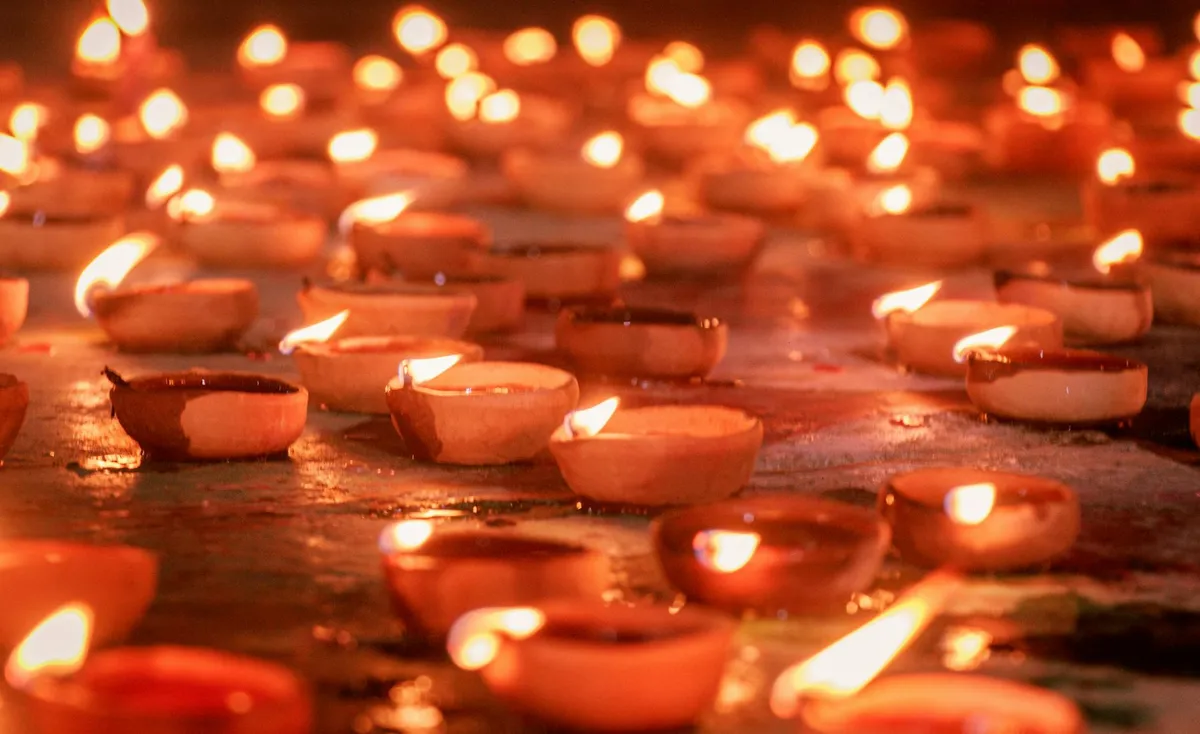
Everyone knows Diwali night. The lights, the diyas, the sweets, the firecrackers, the new clothes, the WhatsApp messages with photos of glowing courtyards. It's the part of the festival that makes it onto Instagram, and rightly so — it's genuinely beautiful, and there's nothing wrong with celebrating it.
But honestly? My favourite part of Diwali isn't the night. It's the day after. There's a quietness to the morning after Diwali that I've been thinking about for years now, and I want to try to put it into words. If you've felt it too, you'll know exactly what I'm talking about. If you haven't, maybe this will give you something to notice next year.
The morning silence
The first thing you notice the morning after Diwali is the quiet. The night before was loud — firecrackers going off until late, the air heavy with smoke, the constant background of celebration. The morning after, the city is hushed. Even the traffic seems softer. People are tired, sleeping in, recovering from too much food and too late a bedtime.
You walk to the balcony and the diyas from the night before are still there, mostly burnt out but a few still flickering in the morning light. The rangoli on the doorstep is intact, slightly scuffed where someone walked across it but still visible. The air smells like cardamom and smoke and a little bit like the marigolds we hung yesterday.
The cleaning ritual
The cleaning starts. In my family, the day-after-Diwali cleaning was always a specific thing — slower than regular cleaning, more contemplative. The diyas get carefully gathered into a basket. The rangoli powder gets swept up but kept, in a small jar, to add to next year's mix. The garlands come down from the doorways and get bundled to compost.
My mother would do this slowly, almost ceremonially, while a pot of tea brewed. She wasn't talking much. She was just being inside the cleaning, which is a kind of attention you don't see her give to most household chores. This was different. This was the closing of something.
The Govardhan Puja layer
In a lot of North Indian traditions, the day after Diwali is Govardhan Puja — the day Krishna lifted Govardhan hill on his little finger to shelter the village of Vrindavan from Indra's rain. People build small mounds of food, decorate them, and offer prayers. The mound is a representation of the hill; the offering is a thank-you for being sheltered.
Even in families that don't do the full Govardhan Puja, the day has a different feel. It's a day of recovery and gentle gratitude. The big celebration is done. Now you sit with it.
The leftovers and the visiting
Then the leftovers begin. Diwali sweets are a whole project — barfis and pedhas and laddoos and chaklis that get prepared over days. After the festival, you have boxes and boxes of them. You eat them with tea. You take them to neighbors. You drop them off at the homes of people who couldn't come over the night before.
This is where the day-after becomes social again, but in a different register. The night-before social was the big gathering. The day-after social is the quieter visits — the auntie next door who you didn't see yesterday, the elderly couple in the next building who don't throw their own party anymore, the family friend who's been sick. You bring them sweets and you sit for a while. You ask how they're doing. You actually listen.
What the day is really for
I've come to think that the day after Diwali is for the integration of the celebration. The night itself is the peak — the spectacle, the joy, the shared excitement. The day after is when the meaning settles. You've celebrated; now you sit with what you've celebrated. The lights, the gathering, the gratitude — all of it gets a chance to become part of you, instead of just being a thing you did.
I don't know if that's the official theological meaning of the day. I doubt anyone in our family thought of it explicitly that way. But that's what the day feels like, and I think that's what the slow cleaning and the quiet visits and the gentle pot of tea are all responding to. The peak is past. Now you let it deepen.
The thing I wish I'd understood sooner
When I was younger, the day after Diwali felt like a letdown. The party was over. The next morning was just a regular morning, except with a hangover from too much food. I missed the energy of the night before. I wanted to keep celebrating.
Now I look forward to it. The night is for everyone. The day after is for the people you love specifically, in slower interactions, with the celebration still in the air but the noise gone. It's the part that makes the festival actually mean something, rather than just being a peak you experience and then forget.
How to do the day after well
If you want to give the day after Diwali the attention it deserves, here are a few things I've learned to do.
Don't rush the morning. Let yourself wake up slowly. The night before was a lot; your body knows. Make a pot of tea and sit with it on the balcony with the leftover diyas.
Do the cleaning yourself, even if you usually don't. It's a kind of meditation. The slow gathering of the diyas, the sweeping of the rangoli, the bundling of the garlands — these are activities that let the festival close properly. If you skip them and let someone else clean up, you miss the closing.
Visit the older people in your life. They'll be home. They probably didn't have a big party themselves. Bring sweets. Sit for an hour. Ask about how they used to celebrate Diwali when they were young. The answers will surprise you.
And whatever you do, don't go straight back to work mode. The day after Diwali, in the traditional reckoning, is still part of the festival. Treat it like that. The integration matters as much as the celebration.